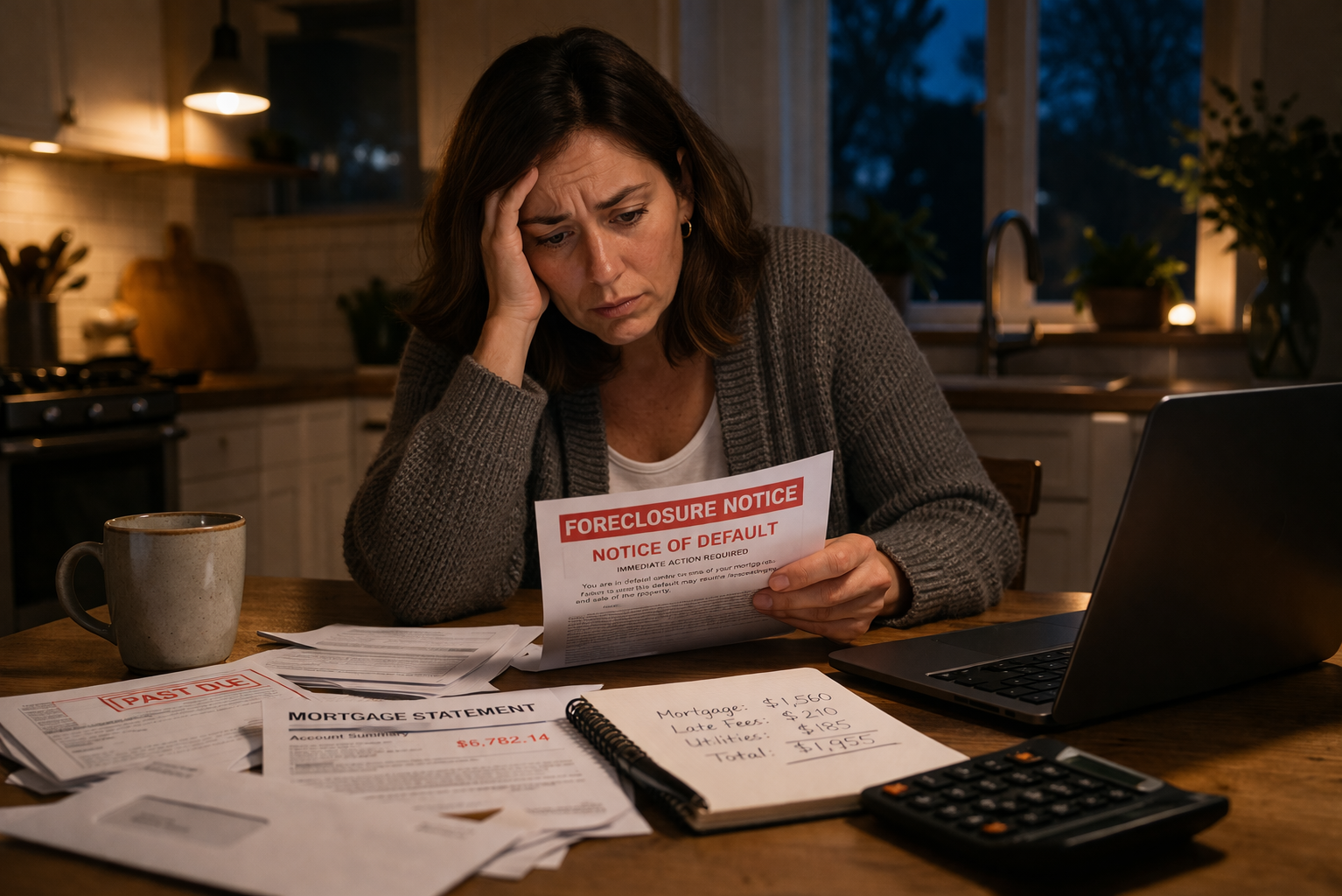
Facing foreclosure can feel overwhelming—especially when time is running out, and traditional lenders have already said no. If you’re behind on payments or already in the foreclosure process, you’re likely looking for a solution that works fast and doesn’t depend on perfect credit or extensive paperwork.
Foreclosure bailout loans are designed for exactly that situation. In this guide, we’ll break down foreclosure bailout loan requirements, explain how qualification really works, and help you understand whether this option can help you stop foreclosure before it’s too late.
Foreclosure Bailout Loan Requirements — Key Takeaways
- Equity is the most important requirement. Most lenders approve based on your property’s value vs. what you owe, not your credit score.
- Bad credit is not a dealbreaker. Many foreclosure bailout loans are asset-based, meaning approval depends on the property, not your financial history.
- Speed matters more than perfection. The earlier you apply, the higher your chances of approval and better terms.
- You may not need income verification. Some lenders offer no-income or low-doc options for urgent foreclosure cases.
- Low equity makes approval harder—but not impossible. Some lenders can still work with tighter margins depending on the deal.
- If foreclosure happens, you could still owe money. A deficiency judgment may apply if the home sells for less than what you owe.
What Is Required to Get a Foreclosure Bailout Loan?
Foreclosure bailout loan requirements are very different from traditional mortgage requirements. Instead of focusing heavily on your credit score, income, and debt-to-income ratio, these loans are primarily based on the value of your property and the amount of equity you have.
At a high level, lenders evaluate four main factors: your property’s current market value, how much you owe on it, how quickly you need funding, and whether there are any legal or title issues. This is known as asset-based lending, and it allows lenders to move much faster and approve borrowers who would normally be declined by banks.
The biggest shift in mindset is this: you’re not being approved as a borrower—you’re being approved based on your property as an asset. That’s why foreclosure bailout loans are often the most viable option for homeowners who need to stop foreclosure quickly.
In practical terms, this means you may still qualify even if:
- Your credit score is low
- Your income is inconsistent or undocumented
- You’ve been denied by traditional lenders
That said, flexibility doesn’t mean no requirements. The key is understanding which factors matter most—and how to position your situation for approval.
How Much Equity Do You Need to Stop Foreclosure?
Equity is the single most important factor in foreclosure bailout loan eligibility. Simply put, equity is the difference between your property’s current market value and the amount you still owe on your mortgage (including fees, penalties, and missed payments).

Lenders use something called loan-to-value (LTV) to evaluate this. LTV is the percentage of your property’s value that is financed by the loan. The lower your LTV, the higher your equity—and the better your chances of approval.
Below is a simplified breakdown of how equity impacts eligibility in different scenarios:
| Property Value | Loan Balance | Equity % | Likelihood of Approval |
| $500,000 | $300,000 | 40% | Very High |
| $500,000 | $375,000 | 25% | High |
| $500,000 | $425,000 | 15% | Moderate |
| $500,000 | $475,000 | 5% | Low |
In most cases, lenders prefer an LTV of 65%–80%, though some may go higher depending on the situation. If you’re unsure where you stand in the process, reviewing a detailed foreclosure timeline can help you understand how urgency impacts your options.
Even if your equity is lower than ideal, you may still have options—especially if your property has strong resale potential or you act quickly before additional fees accumulate.
Credit Score & Income Requirements: What Lenders Actually Look For
One of the biggest misconceptions about foreclosure bailout loan requirements is that you need good credit to qualify. In reality, many lenders offering these loans do not rely heavily on credit scores at all.
Traditional lenders focus on your financial profile—your income, employment history, and creditworthiness. But foreclosure bailout loans operate differently. They are built around asset-based lending, where the property itself determines the strength of the deal.
This means:
- You can often qualify with bad credit
- Past financial issues are less important
- Income verification may be minimal or not required
This flexibility is exactly why foreclosure bailout loans are one of the best options for borrowers who have been turned away by banks. Instead of asking, “Can you afford this loan long-term?”, lenders ask, “Does this property support the loan?”
For homeowners in urgent situations, this shift makes all the difference. It opens the door to fast approvals and gives you a realistic chance to stop foreclosure even if your financial profile isn’t ideal.
Property Requirements
Because foreclosure bailout loans are asset-based, the property itself plays a central role in approval. Lenders will evaluate not just the value of the property, but also its condition, location, and overall marketability.
In general, most types of residential properties are eligible, including owner-occupied homes, rental properties, and investment properties. However, properties in poor condition or in declining markets may require additional scrutiny.
The key question lenders ask is: Can this property be sold or refinanced if needed? If the answer is yes, your chances of approval increase significantly.
Other factors that may come into play include:
- Whether there are existing liens or title issues
- The stage of foreclosure
- Local market conditions
Even if your situation isn’t perfect, a strong property can often compensate for other weaknesses. This is why foreclosure bailout loans remain accessible to borrowers who wouldn’t qualify elsewhere.
When You Won’t Qualify (And What to Do Instead)
While foreclosure bailout loans are significantly more flexible than traditional financing, there are still situations where approval may not be possible—at least not immediately. Understanding these scenarios early can help you avoid wasted time and, more importantly, pivot toward solutions that can still protect your finances or give you more control over the outcome.
The three most common reasons borrowers don’t qualify are low or nonexistent equity, extremely tight timelines, and unresolved legal or title issues. Each of these creates a different kind of risk for lenders—but none of them mean you’re completely out of options.
Common Disqualification Scenarios
- Not enough equity in the property
- Foreclosure auction is too close or already scheduled
- Title issues, liens, or legal complications
Not qualifying for a foreclosure bailout loan doesn’t mean you’ve run out of options—it simply means you need to adjust your strategy.
Whether it’s improving your eligibility, exploring alternative solutions, or acting faster, the earlier you respond, the more control you retain over the outcome.
And in foreclosure situations, control is everything.
Let’s break these down and, more importantly, look at what you can do next.
Low or No Equity: What Are Your Options?
If you owe nearly as much as (or more than) your property is worth, lenders may not be able to structure a foreclosure bailout loan that makes sense. Since these loans are asset-based, equity is what protects the lender—and without it, approval becomes much harder.
However, this doesn’t mean you’re out of options. In fact, acting early here can still give you control over the outcome.
Possible next steps include:
- Selling the property before foreclosure to preserve any remaining equity
- Negotiating with your lender for a loan modification or repayment plan
- Exploring creative solutions such as partial payoffs or investor involvement
The key is speed. Even small amounts of equity can disappear quickly as fees, penalties, and legal costs accumulate during the foreclosure process.
Auction Is Too Close: What You Can Still Do
If your foreclosure sale is just days away, your options become more limited—not because solutions don’t exist, but because there may not be enough time to execute them properly.
Foreclosure bailout loans require at least a minimal window for underwriting, valuation, and closing. If that window is gone, you may need to look at emergency alternatives.
In these situations, you should immediately:
- Confirm your exact sale date and timeline
- Contact a lender who specializes in urgent foreclosure cases
- Understand realistically when it is too late to stop foreclosure
Even at this stage, there may still be last-minute strategies available—but they require immediate action and experienced guidance.
Title or Legal Issues: How to Resolve Them Quickly
Title issues, such as unresolved liens, ownership disputes, or legal complications, can delay or prevent loan approval because they create uncertainty around the property.
The good news is that many of these issues can be resolved—but they must be addressed quickly and correctly.
Your best course of action is to:
- Identify all liens or claims against the property
- Work with a title company or attorney to resolve them
- Communicate openly with your lender about timelines
In some cases, lenders can still proceed if there is a clear path to resolution, but transparency and speed are essential.
If You Don’t Qualify Today, You May Still Qualify Tomorrow
One of the biggest mistakes homeowners make is assuming that a “no” is final. In reality, foreclosure situations are dynamic—equity changes, timelines shift, and new opportunities can emerge quickly.
Even if you don’t qualify right now, you may be able to:
- Improve your position by acting quickly
- Resolve issues that are blocking approval
- Reapply under better conditions
If your goal is to stop foreclosure, the most important thing you can do is stay proactive. Waiting reduces your options—but taking action, even after a setback, can still lead to a solution.
What Happens If You Can’t Stop Foreclosure?
If foreclosure proceeds to completion, your home will typically be sold at auction. However, many homeowners don’t realize that the process doesn’t always end there.
If the property sells for less than what you owe, the remaining balance may still be your responsibility. This is known as a deficiency judgment.
In practical terms, this means:
- You could still owe money after losing your home
- The lender may pursue collection of the remaining balance
- Your credit will be significantly impacted
While not every case results in a deficiency judgment, it’s a risk worth understanding. This is one of the main reasons why many homeowners pursue foreclosure bailout loans—to avoid not just losing their home, but also facing additional financial consequences.
How to Improve Your Chances of Foreclosure Bailout Loan Approval
If you’re considering a foreclosure bailout loan, there are several steps you can take to improve your chances of getting approved—and doing so quickly.
How to Increase Approval Odds
- Know your property’s current market value
- Gather basic documentation (mortgage statement, property details)
- Act before the foreclosure auction stage
- Work with experienced lenders who specialize in foreclosure cases
Timing is often the deciding factor. The earlier you act, the more flexibility you have—and the more options are available to you.
Even small delays can reduce your equity (due to fees and penalties) and make approval more difficult. Being proactive can make a significant difference in both approval and loan terms.
Foreclosure Bailout Loan Requirements vs Traditional Loan Requirements
Understanding the difference between foreclosure bailout loans and traditional loans can help clarify why these loans are often the best solution in urgent situations.
| Requirement | Foreclosure Bailout Loan | Traditional Loan |
| Credit Score | Not required / flexible | Strict |
| Income Verification | Often not required | Required |
| Approval Speed | 24–72 hours | Weeks |
| Focus | Property value | Borrower profile |
This comparison highlights why traditional financing often fails borrowers in foreclosure—while bailout loans are specifically designed to succeed in those same situations.
Why Our Foreclosure Bailout Loans Work When Others Don’t
If you’ve been denied by banks or told you don’t qualify, you’re not alone. Many of the homeowners we work with come to us after exhausting traditional options.
Our HML Solutions team approaches things differently.
We don’t require a minimum credit score, and we don’t rely on traditional income verification. Instead, we focus on your property—because that’s what truly matters in a foreclosure situation.
If you’re evaluating lenders, make sure you understand how to avoid foreclosure bailout scams so you don’t fall into another financial trap while trying to save your home.
Why Borrowers Choose Us
- We offer fast approvals, often within 24–72 hours
- We provide flexible, asset-based qualifications
- We work with higher LTV scenarios than many lenders
- We specialize in urgent foreclosure cases
Our goal is simple: help you secure a solution when time is running out. That’s why many borrowers turn to us as their last—and best—option when searching for the best foreclosure bailout loan or a reliable foreclosure bailout loan provider.
Apply now or reach out to our foreclosure rescue loan specialist to get the best terms!
Next Steps: Get Approved Before It’s Too Late
If you’re facing foreclosure, the most important step you can take is to act now. The longer you wait, the fewer options you’ll have—and the harder it becomes to secure a solution.
Foreclosure bailout loans are designed to move quickly, but timing still matters. Starting the process early can mean the difference between saving your home and running out of options.
If you’re exploring ways to stop foreclosure, now is the time to take action. Understanding your eligibility is the first step—but moving forward is what makes the difference.
Frequently Asked Questions
Yes, many lenders focus on your property’s value rather than your credit score, making bad credit less of a barrier.
In many cases, approval and funding can happen within 24–72 hours, depending on the situation.
Typically, you’ll need basic property and loan information, not extensive income or financial documentation.
Most lenders prefer at least 15%–30% equity, though some may work with less depending on the deal.
A deficiency judgment is a court order that allows a lender to collect the remaining balance if your home sells for less than what you owe after foreclosure. This means you could still be responsible for paying the difference even after losing the property.