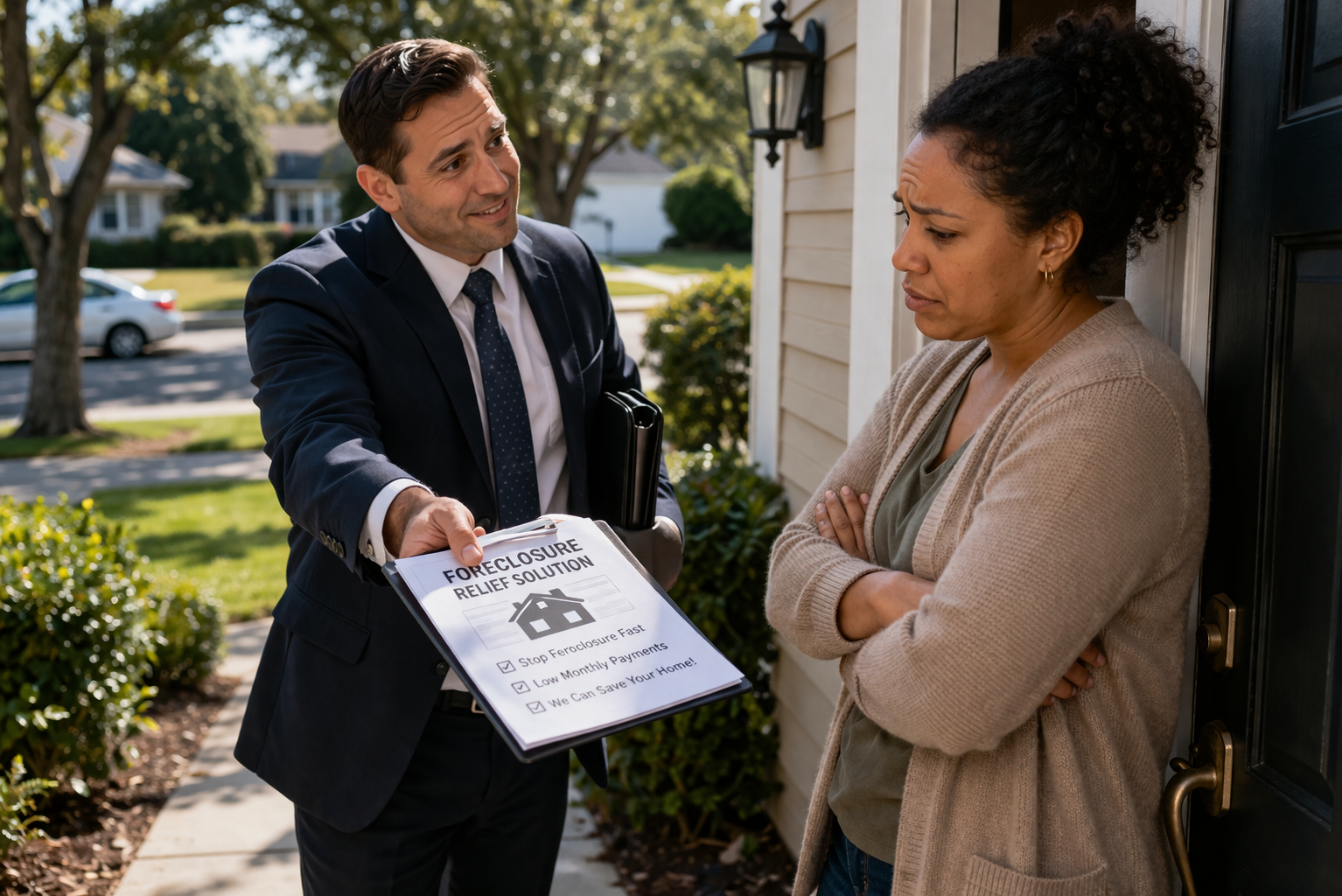
Facing foreclosure is one of the most stressful financial situations a homeowner can experience. When time is short, and options feel limited, it’s natural to look for fast solutions—but this is exactly when scammers are most active. Many homeowners don’t lose their homes to foreclosure alone—they lose them to the wrong “help.”
In this guide, you’ll learn how to avoid foreclosure scams, recognize warning signs early, and make safe, informed decisions. More importantly, you’ll understand what legitimate solutions actually look like—and how to move forward with confidence.
Common Foreclosure Rescue Scams to Watch Out For
Not all foreclosure scams look obvious. In fact, many are designed to appear professional and trustworthy. They may have websites, contracts, and even customer service representatives. The key is understanding the structure behind the offer—not just how it looks on the surface.
| Scam Type | How It Works | Warning Signs |
| Phantom Help | Promises negotiation or foreclosure relief | No results, vague updates |
| Bait-and-Switch | Terms change at signing | Pressure to sign quickly |
| Title Transfer | You give up ownership | Requests to transfer the deed |
| Upfront Fees | Payment before service | Large, unclear fees |
| Predatory Loans | Real loan with harmful terms | High rates, hidden clauses |
Understanding these patterns helps you quickly identify offers that are not in your best interest.
Phantom Help and Fake Foreclosure Assistance Companies
These companies claim they will negotiate with your lender, stop foreclosure, or restructure your loan. They often require upfront payment and promise results within a short timeframe.
In reality, they do nothing—or very little—and disappear once they’ve collected fees. Homeowners often realize too late that no actual work was done.
Bait-and-Switch Loan Offers
This type of scam starts with attractive terms: low rates, fast approval, and minimal requirements. But when it’s time to sign, the actual terms are completely different.
The pressure to sign quickly makes it easy to overlook these changes, especially if you’re trying to stop foreclosure urgently.
Title Transfer or “Save Your Home” Scams
In this scenario, you’re asked to transfer ownership of your property temporarily, with the promise that you’ll regain it later. In most cases, you lose ownership permanently.
These scams are particularly dangerous because they appear structured and legal—but they fundamentally remove your control over your property.
Upfront Fee Scams
A common red flag is being asked to pay large fees before any service is delivered. While some legitimate services may involve fees, they are always clearly defined and tied to specific actions—not vague promises.
Predatory Lending Disguised As Assistance
Not all scams are illegal—some are simply structured to benefit the lender at your expense. These loans may include extremely high interest rates, hidden fees, or terms that make repayment unrealistic.
Red Flags When Choosing a Foreclosure Bailout Lender

Choosing the right lender is one of the most important decisions you’ll make during foreclosure. While there are legitimate foreclosure bailout loan providers, there are also many offers that are misleading or outright dangerous.
| Legitimate Lender | Scam Lender |
| Clear terms in writing | Vague or changing terms |
| Transparent process | Confusing explanations |
| Verifiable presence | No online footprint |
| Realistic outcomes | Guaranteed results |
When evaluating options like a foreclosure bailout loan, always review requirements carefully and compare multiple lenders before making a decision.
Lack of Transparency in Terms and Process
A legitimate lender will clearly explain how their loan works, what it costs, and what happens in different scenarios. If the explanation feels vague or overly complicated, that’s a warning sign.
Transparency is not optional—it’s a baseline requirement.
Pressure To Act Immediately Without Explanation
While foreclosure timelines are real, no legitimate lender will force you to sign without giving you time to understand the terms. Urgency should come from your situation—not from the lender’s tactics.
Requests for Large Upfront Payments
If a lender requires significant fees before providing any real service, proceed with caution. This is one of the most common foreclosure bailout loan red flags.
No Verifiable Business Presence
A legitimate lender should have:
- A functional website
- Verified contact information
- Reviews on third-party platforms
If you can’t independently verify their existence, that’s a major concern.
Unrealistic Guarantees
No lender can guarantee approval or stop foreclosure instantly without evaluating your situation. Any claim like this should be treated as a scam loan warning sign.
Questions to Ask Before You Accept Any Loan
Before you agree to any loan, you need more than reassurance—you need clarity. Asking the right questions helps you uncover risks, understand the full cost, and determine whether the lender is trustworthy.
A legitimate lender will expect questions and provide clear answers. If a lender avoids direct answers or becomes defensive, that’s a red flag in itself.
Questions are not just for information—they’re a way to test transparency.
📌 10 Questions to Ask a Foreclosure Lender Before Signing
- What are the full loan terms and total repayment cost?
- How quickly can funding happen, realistically?
- Are there any fees not listed in the agreement?
- What happens if I miss a payment?
- Can I review everything in writing before signing?
- Are you licensed and registered in my state?
- What documentation is required from me?
- How exactly does this loan stop foreclosure?
- What risks should I be aware of?
- What happens if my situation changes?
What To Do With the Answers You Receive
It’s not just about asking questions—it’s about evaluating the responses. Clear, direct answers indicate professionalism and transparency. Vague or inconsistent answers indicate risk.
When comparing lenders, focus on clarity over promises. The best foreclosure bailout loan options are the ones you fully understand—not the ones that sound the most appealing at first glance.
How To Verify A Legitimate Foreclosure Lender
Verifying a lender is one of the most important steps you can take when trying to avoid foreclosure scams. Even if an offer looks professional or sounds convincing, that doesn’t automatically make it safe.
The goal isn’t just to find a lender—it’s to confirm that the lender is legitimate, transparent, and capable of delivering what they promise. Taking a few extra steps upfront can prevent costly mistakes and protect your home.
Below are the most important ways to verify a foreclosure lender before moving forward:
- Check licensing and registration
- Look for independent reviews and reputation signals
- Verify physical presence and contact information
- Review loan terms and documentation carefully
Check Licensing And Registration
Start by confirming that the lender is properly licensed and registered to operate in your state. In the U.S., most legitimate lenders must comply with state-level regulations, and this information is usually publicly available through official databases. A licensed lender is accountable to regulatory authorities, which adds a layer of protection for you as a borrower.
If you cannot find any record of the lender, or if their licensing details don’t match their claims, that’s a serious red flag. Even for hard money lenders, who may have slightly different requirements, there should still be a verifiable legal presence and business registration.
Look For Independent Reviews And Reputation Signals
Don’t rely solely on testimonials featured on the lender’s website, as those can be selectively presented. Instead, look for reviews on third-party platforms such as Google, Trustpilot, or Better Business Bureau listings. Pay attention to patterns rather than individual comments—consistent complaints about hidden fees, poor communication, or misleading terms are warning signs.
At the same time, a complete absence of reviews can also be concerning, especially if the company claims to have extensive experience. A legitimate lender should have some form of digital footprint that reflects real interactions with past clients.
Verify Physical Presence And Contact Information
A trustworthy lender should have a clear and verifiable business presence, including a physical address and working contact information. Check whether the address listed on their website actually exists and corresponds to a real office location.
You can also call their phone number to see how they handle inquiries—professional lenders will answer questions clearly and without hesitation. Be cautious if communication is limited to email, messaging apps, or constantly changing phone numbers. A lack of stable, verifiable contact information often indicates a higher risk of fraud.
Review Loan Terms And Documentation Carefully
Never move forward based on verbal promises alone—everything should be clearly documented in writing. A legitimate lender will provide detailed loan terms, including interest rates, repayment structure, fees, and potential penalties. Take the time to read through all documents carefully, and don’t hesitate to ask for clarification on anything that seems unclear.
If the lender discourages you from reviewing documents thoroughly or pressures you to sign quickly, that’s a major warning sign. Transparency in documentation is one of the strongest indicators that you’re dealing with a legitimate foreclosure lender rather than a scam.
Lender Verification Checklist
Taking these steps gives you control and reduces the risk of falling into a scam.
| Step | What to Check | Why It Matters |
| Licensing | State registration | Confirms legitimacy |
| Reviews | Third-party feedback | Shows reputation |
| Contact Info | Address and phone | Verifies existence |
| Documents | Written terms | Prevents surprises |
Safe Alternatives If Something Feels Off
If an offer doesn’t feel right, trust that instinct. There are legitimate ways to stop foreclosure without taking unnecessary risks.
- Work with legitimate foreclosure bailout lenders. Some lenders specialize in working with homeowners who have low credit or urgent timelines. These lenders focus on property value and situation—not just credit scores.
- Explore loan modification or refinancing. Depending on your lender, you may be able to adjust your loan terms or refinance into a more manageable structure.
- Consider selling strategically. In some cases, selling your home may preserve equity and provide a cleaner financial reset.
- Understand your timeline and options. Knowing your foreclosure timeline helps you make better decisions and avoid rushed choices. It also helps you determine when it is too late to stop foreclosure—and when you still have viable options.
Why Foreclosure Scams Are So Common
Foreclosure scams are not random—they’re highly targeted and strategically designed to take advantage of homeowners at their most vulnerable. When you’re facing financial pressure, your decision-making process changes. You’re not just looking for the best option—you’re looking for the fastest way out. That shift in mindset is exactly what scammers exploit.
Why Homeowners in Foreclosure Are Prime Targets
When foreclosure begins, homeowners often feel isolated and unsure of their options. Many have already been denied by traditional lenders, which makes alternative offers more appealing. Scammers position themselves as the “only solution,” especially for people with low credit or urgent timelines.
This is where the danger lies: the more limited your options feel, the easier it is to accept something without fully verifying it.
The Role of Urgency, Fear, and Limited Knowledge
Foreclosure is time-sensitive, and scammers use that urgency as leverage. They’ll often say things like “you need to act today” or “this is your last chance.” These statements are designed to bypass your ability to think critically.
At the same time, many homeowners don’t fully understand how foreclosure works. Without a clear understanding of the foreclosure timeline, it’s difficult to judge whether an offer is realistic—or completely fabricated.
How Scammers Exploit Confusion Around the Process
Scammers frequently use complex language, vague promises, or partial truths to create confusion. They may claim they can “delay the process” or “negotiate with your lender,” without explaining how. This lack of clarity is intentional.
The reality is that legitimate solutions do exist—but they are always transparent about timelines, risks, and outcomes. Understanding that difference is the foundation of avoiding foreclosure scams.
How to Protect Yourself During the Process
Even after you’ve identified a legitimate lender, your job isn’t done. The foreclosure process is fast-moving, and mistakes can still happen if you’re not careful with documentation, communication, or decision-making. Protecting yourself isn’t about being overly cautious—it’s about staying in control at every step. The more informed and organized you are, the harder it becomes for anyone to take advantage of your situation.
Below are the most effective ways to protect yourself while navigating foreclosure and evaluating loan options.
Never Sign Documents You Don’t Fully Understand
One of the most common mistakes homeowners make is signing documents under pressure without fully understanding the terms. Even if you trust the lender, it’s essential to read everything carefully and take the time to process what you’re agreeing to. Loan agreements can include details about fees, penalties, repayment structure, and consequences of default—all of which directly impact your financial future.
If something feels unclear, ask for clarification or take time to review the documents independently. A legitimate lender will always allow you to fully understand the agreement before signing.
Avoid Sharing Sensitive Information Too Early
Your personal and financial information is valuable, and sharing it too early can expose you to unnecessary risk. Before providing details such as your Social Security number, bank account information, or full financial history, make sure the lender has been properly verified.
Scammers often collect this information under the guise of “processing your application,” even if no real loan exists. A legitimate lender will only request sensitive information at the appropriate stage of the process and will explain why it’s needed. Taking this precaution helps protect you not just from scams, but also from identity theft.
Take Time To Compare Options—Even Under Pressure
Foreclosure creates urgency, but that doesn’t mean you should accept the first offer you receive. Comparing at least two or three options can give you a clearer understanding of what’s reasonable and what isn’t. Even small differences in loan terms can have a significant impact on your long-term financial situation.
A trustworthy lender will understand that you need to evaluate your options and won’t pressure you to commit immediately. Making a quick but informed comparison can help you avoid costly mistakes while still acting within your timeline.
Keep Records Of All Communication And Documents
Maintaining organized records is one of the simplest yet most effective ways to protect yourself. Save copies of emails, contracts, text messages, and any written agreements related to your loan or foreclosure process. This documentation can be critical if disputes arise or if you need to verify what was promised versus what was delivered.
Keeping everything in one place also helps you stay organized and reduces confusion as you move forward. In a time-sensitive situation like foreclosure, having clear records can make decision-making much easier and more confident.
📌 Quick Safety Checklist Before Accepting Any Offer
- Read all documents carefully before signing
- Verify lender credentials before sharing sensitive information
- Compare at least two options
- Keep copies of all agreements and communication
- Ask questions until you fully understand the terms
Stay In Control Of Your Decisions Throughout The Process
The most important principle is this: you should always feel like you’re making the decision, not being pushed into one. If at any point you feel pressured, confused, or unsure, it’s worth pausing and reassessing your options. Legitimate lenders provide guidance, but they don’t remove your control or rush your decision-making.
Staying grounded and informed helps you navigate the process with confidence, even under pressure. Protecting yourself ultimately comes down to maintaining clarity, asking the right questions, and moving forward on your own terms.
HML Solutions Foreclosure Bailout Loans — A Safe, Fast Option When Time Matters
When you’re facing foreclosure, you don’t have the luxury of waiting weeks for approvals or dealing with rigid requirements. That’s where we come in.
We focus on your property and situation—not just your credit score. This allows us to move quickly and provide solutions that traditional lenders often can’t:
- No credit score requirement. We don’t rely on credit scores, which makes our loans accessible to homeowners who have been turned away elsewhere.
- Minimal documentation. Our process avoids unnecessary paperwork, helping you move forward faster.
- Fast funding for urgent situations. We understand how critical timing is in foreclosure cases, and we structure our process accordingly.
What sets us apart is that we operate with full transparency and a clear, structured process. We walk you through every step, provide all terms in writing, and make sure you understand exactly what you’re agreeing to before moving forward. There are no hidden fees, no last-minute changes, and no pressure tactics—just a straightforward solution designed to help you move out of foreclosure safely and with confidence.
Our foreclosure rescue loans are ideal for homeowners who:
- Have low or damaged credit
- Need fast funding
- Have been denied by traditional lenders
We focus on transparency, speed, and real solutions—so you can move forward with confidence. Apply now to learn more about our services!
Final Thoughts: Move Fast — But Don’t Rush the Wrong Decision
Foreclosure creates urgency—but urgency should never replace clarity.
Scammers rely on confusion, pressure, and unrealistic promises. Legitimate solutions rely on transparency, structure, and real outcomes.
If you take one thing from this guide, let it be this: the safest decision is the one you fully understand.
Foreclosure Scams FAQ
Yes, some lenders use deceptive practices, which is why verification is essential.
Check licensing, reviews, and written terms before agreeing to anything.
Working with a verified lender or structured solution, like a legitimate bailout loan.
They can be safe if offered by a transparent lender with clear, fair terms.